Build 6
HUD, Highscores & Heights
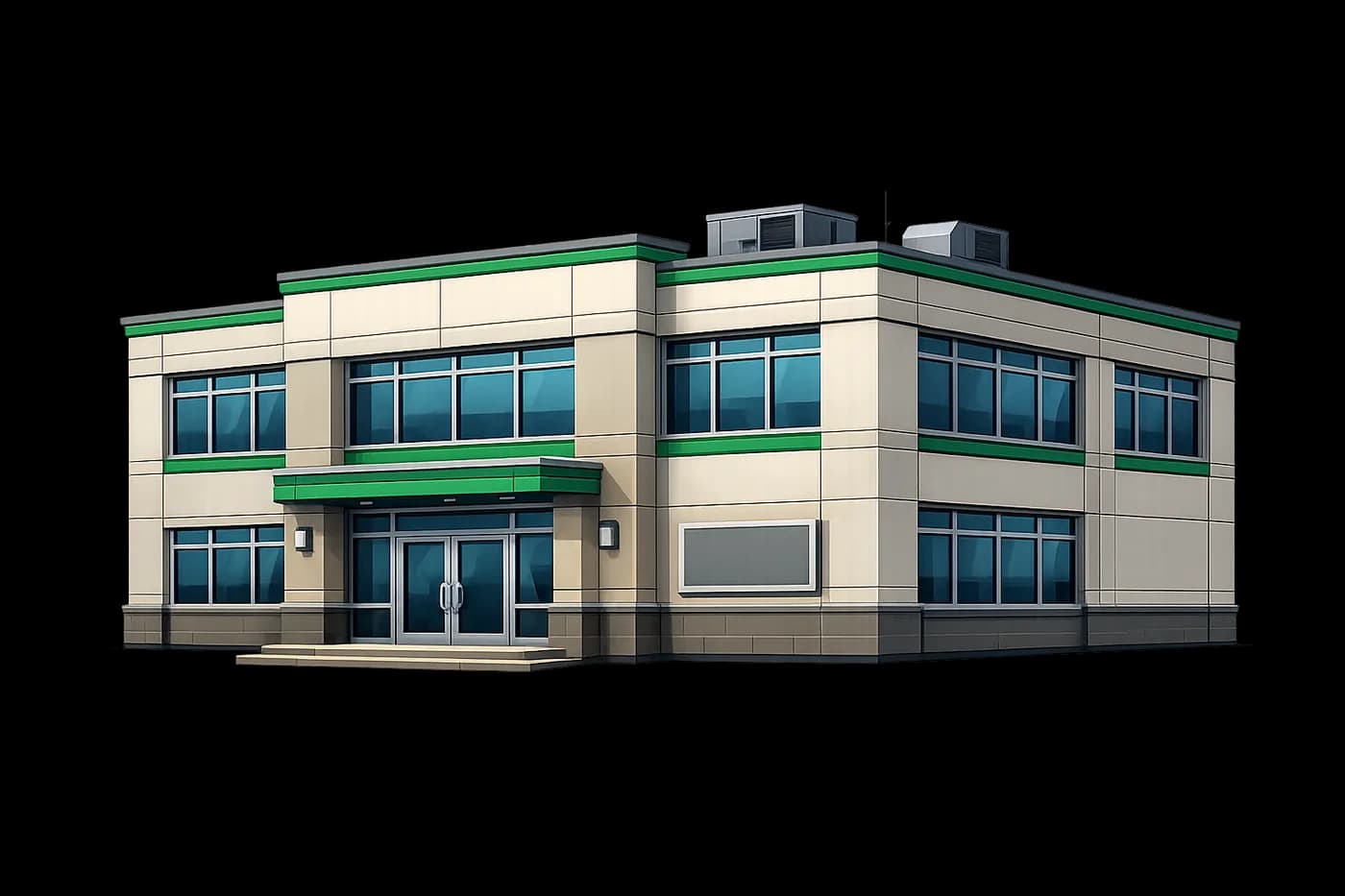
Build 6 is on your account page, signed, for all three platforms. It has a HUD you can read at a glance, a roof you can get onto, and — at last — somewhere your run gets written down.
The minimap is an actual map
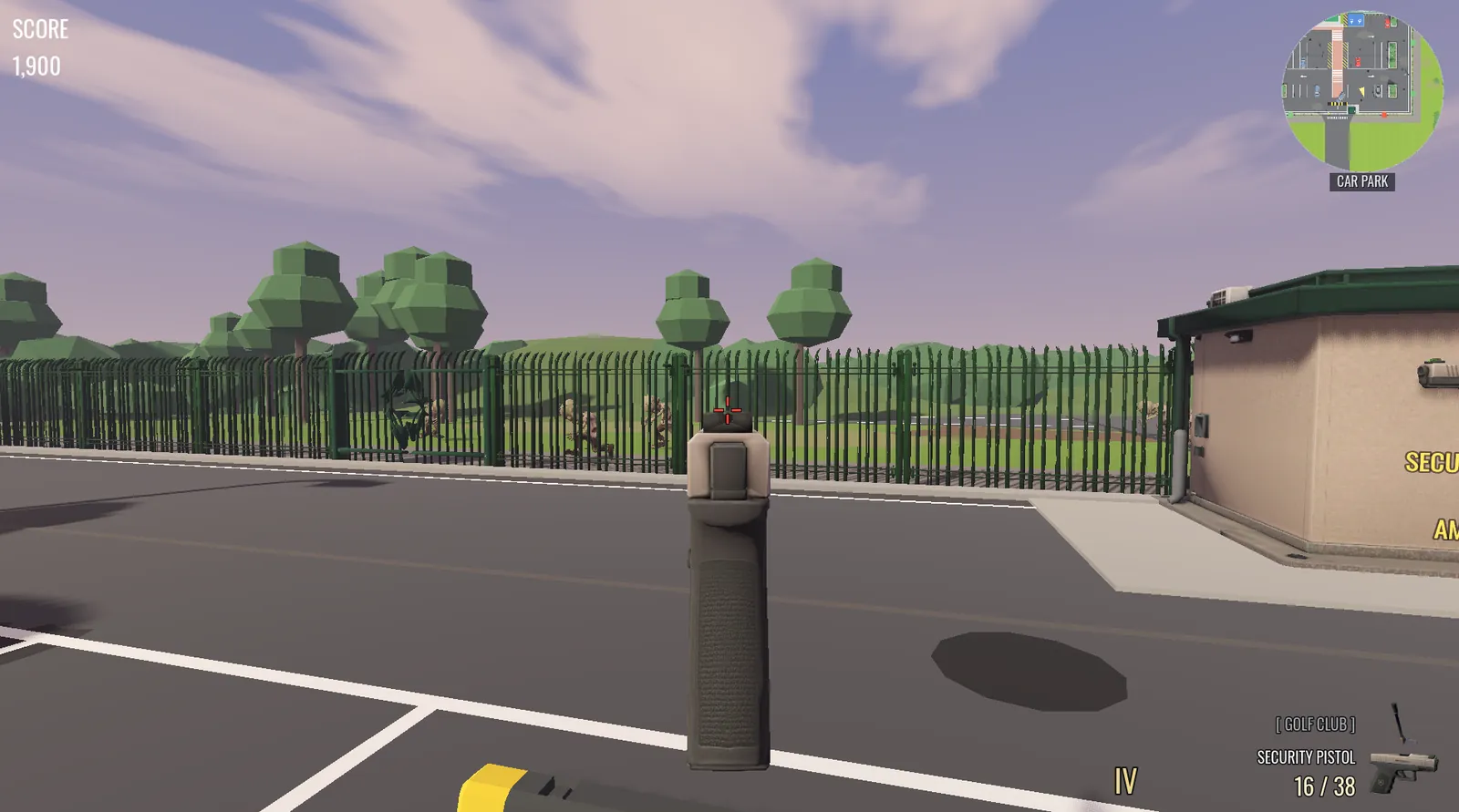
It used to be three rectangles: car park, building, service yard. Which is accurate, and useless — everything a survivor actually navigates by was missing from it, so the corner of the screen told somebody backing into a room that they were “somewhere in the building”.
It is a window cut out of the floor's own plan now, with the walls, the partitions and the furniture on it, moving with you as you walk. Under the circle is the name of the room you are standing in — not the room you are looking at, and not the floor being drawn, so it still says something true halfway up a staircase.
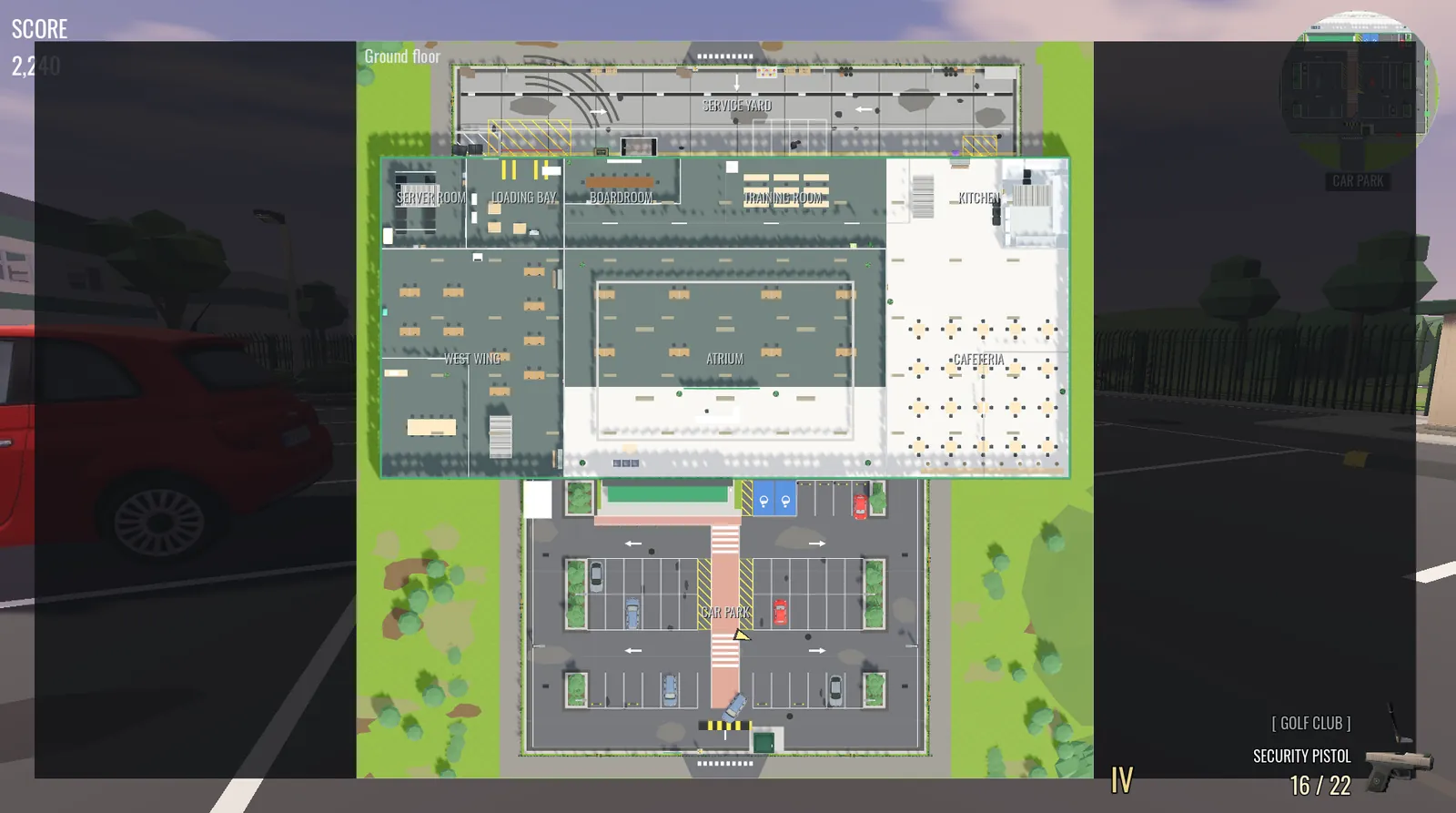
The rooms got names worth printing in the process. The two long strips at the back of the building were one section each, sixty metres wide, called back rooms and upper back — which is a direction rather than a room, and it was the same direction on both floors. There are ten rooms back there now: the server room, the loading bay, the boardroom, the training room and the kitchen downstairs; the janitor's store, the staff room, the project room, the admin office and the caretaker's store above them.
And the rest of the screen with it
- A hit tells you where it came from. A chevron on the ring round the crosshair, fading over a second and a half. The red wash says you are being bitten; this says by what, and from which side.
- The weapon block has pictures in it. Three lines — the hand, the other slot, and your back — each with the weapon on it rendered from the model. Three rifles are three rifles now rather than three names to squint at.
- The game has type. One face for everything that informs, and a worn typewriter for the three things that interrupt: the round banner, the death screen and the title.
- The crowd comes from everywhere. The undead used to give up looking for you past 36 m, so a share of every round walked in through a back breach, found nobody, and stopped between the boards and the bins. They will now cross the whole site — and, because they will, the spawns lean on you less hard: the far side of the compound went from two arrivals in five to better than half.
The roof is open
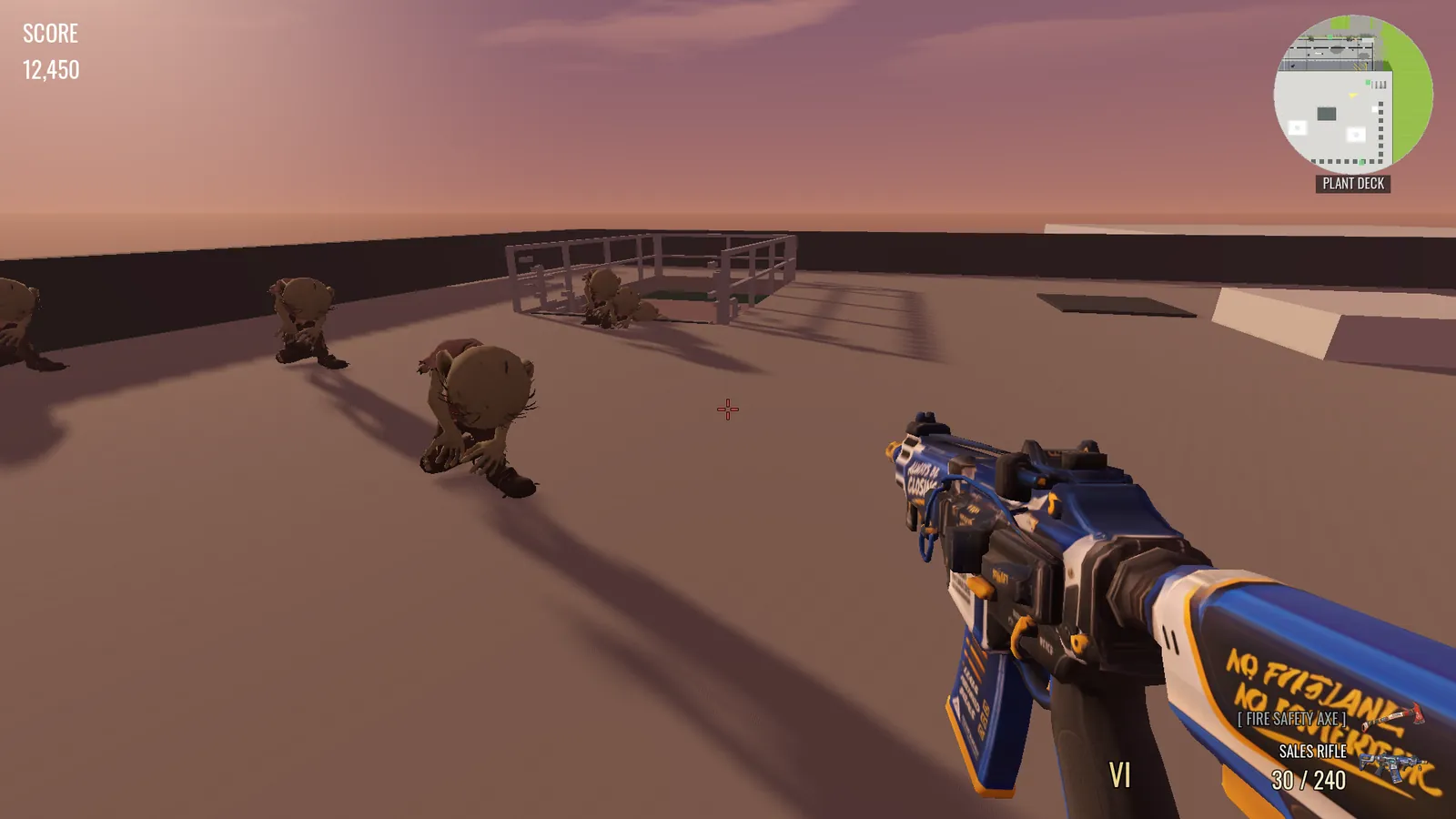
There is a third floor. The office had two and a lid; the lid is a deck now, and both ways up to it are behind a 2500-point door — one in the janitor's store on the west side, one in the caretaker's store on the east.
It is not a spawn zone and it is not a safe room. Nothing arrives up there, but anything that can find a route will follow you up, and the two staircases are the only way on or off. The parapet is chest high on the outside and will not let you over it, which is deliberate: the one thing worth climbing for is being able to shoot down into the car park, and a survivor who hops off the edge lands somewhere the round cannot reach them.
Two flights, two stores, two doors. If you buy one and not the other, you have a way up and no way down that is not the way you came.
Highscores
There is no win condition in this game, so there has never been anything to compare. The only honest measure is how far a compound carried you, and that is what the boards rank: the round you reached. Points and run time break ties, in that order.
- A round counts once it ends. Dying part-way through 18 is a round-17 run.
- Points are what you earned, not what you had left. Buying a door does not cost you a place on the board, and neither does dying.
- Solo and squad are separate boards. The crowd scales with the number of players, so the two are not comparable and are not compared.
- A squad is its lobby. The two-word name your lobby was given — RUSTY-STAPLER — is the team, and every survivor who was in it is named on the row. Play again under the same lobby name and it is the same team's record.
- One row each. Your best run and nobody's repeats, so a good evening cannot fill the page.
A co-op run now actually ends, which it did not before. Everybody who goes down comes back at the start of the next round — but a round only turns over once the field is clear, and a team with nobody left standing has nobody to clear it. So a wiped squad sat on a death screen watching a compound that had quietly stopped. The last survivor falling is the end of the run now, the screen says so, and that is the moment the score is written down.
Everybody has a display name now. One was dealt to your account when you made it — something along the lines of TiredIntern — and it is unique: nobody else in the beta can be using it. It is what your teammates see in a lobby, what sits over your head in a match, and what the boards call you. Change it on your account page, beside your key, where your own best run on each board is too. The game picks up the new one next time you start it.
Runs are posted by the game, so they only come from a build holding a live access key, and in a squad it is the host that writes the team's run down. Play on build 6 if you want the evening to count.